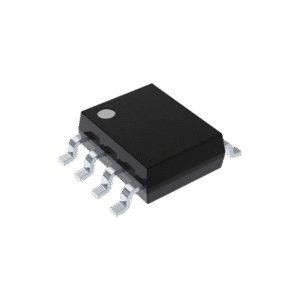
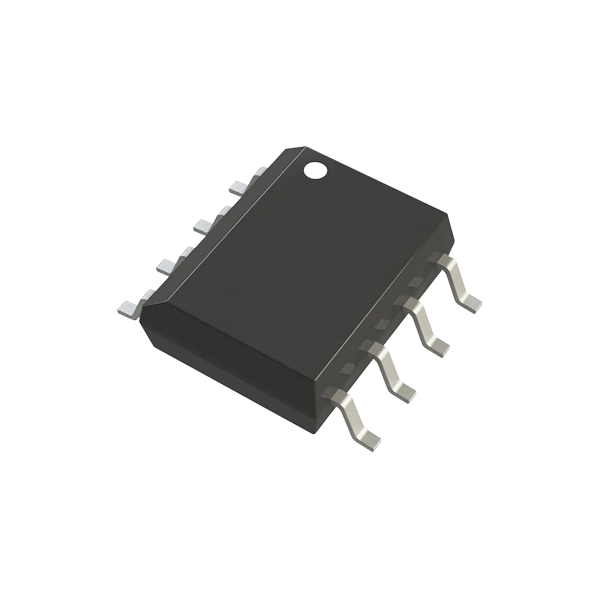
The TJA1050T from NXP Semiconductors is a high‑speed CAN (Controller Area Network) transceiver that serves as the interface between a CAN protocol controller and the physical CAN bus. It is designed for applications requiring baud rates from 60 kbps up to 1 Mbps, particularly in automotive and industrial environments .
The device converts the single‑ended TXD signal from the CAN controller into a differential signal on the CANH/CANL bus lines, and conversely converts differential bus signals into a single‑ended RXD signal for the controller. It is fully compliant with the ISO 11898‑2 high‑speed CAN physical layer standard .
The TJA1050T features two operating modes controlled by pin S (pin 8) :
-
High‑speed mode (S = GND or floating): Normal operation with maximum switching speed.
-
Silent mode (S = VCC): Transmitter is disabled; only the receiver remains active. This mode can be used to prevent bus blocking if the CAN controller malfunctions.
Built‑in protection features include a TXD dominant time‑out timer that prevents the bus from being permanently driven into the dominant state (which would block all network communication) if TXD is held low due to a hardware or software failure . A thermal protection circuit disables the transmitter when the junction temperature exceeds approximately 165°C, and a current‑limiting circuit protects the output stage from short‑circuits .
The device also provides ±12 kV ESD protection on the bus pins (Human Body Model) and can withstand automotive electrical transients per ISO 7637, with a bus pin voltage tolerance of ‑58V to +58V .